

You have the recipes, the energy, and the dream of serving your food on wheels. What you still need is a clear plan. This food trailer buying guide walks you through every stage of the journey — from your first concept sketch to the day you slide open the service window and greet your first customer.
A food trailer can turn a side hustle into a full business, yet many owners make expensive mistakes simply because they skip the planning phase. Therefore, we designed this guide as a step-by-step roadmap. Follow each step in order, and you will save money, avoid delays, and launch with confidence.
Step 1: Define Your Menu and Business Model First
Before you think about steel, wheels, or paint, lock down your menu. Your menu decides the size of your mobile kitchen, the equipment list, the water and power supply, and even the number of staff you need. Consequently, a menu change later in the process means redesigning your whole build.
Answer these questions before you contact any manufacturer:
- What five to ten items will you serve?
- Which items need on-site cooking, and which need only assembly?
- How many orders do you expect per hour at peak times?
- Will you operate at events, street corners, festivals, or private sites?
Once you finalize the menu, choose your business model. Some owners run a single trailer and sell directly to customers; others build fleets and lease them to franchisees or event organizers. In addition, decide whether you will cater private events, because that choice affects your layout and equipment needs.
Step 2: Choose the Right Size and Layout
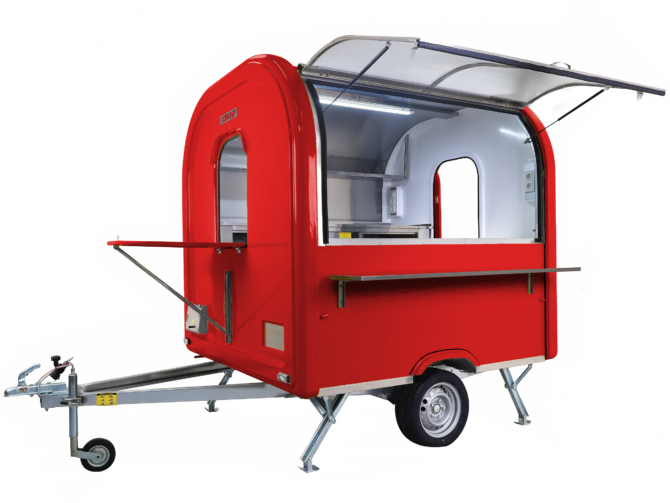
After you define the menu, match the trailer size to your workload. A 14-foot trailer suits a simple coffee or ice cream stand, while a 20-foot or longer unit fits a full mobile kitchen with fryers, griddles, and prep counters. Keep in mind that a larger trailer also requires a stronger tow vehicle and more storage space.
Layout matters more than length. Design the workspace around the classic kitchen triangle — the efficient path between cooking, prep, and service. For example, place the griddle near the service window so orders travel a short distance, and keep the refrigerator close to the prep area.
Moreover, plan the traffic flow for your team. Two people working in a cramped aisle create delays and safety risks; therefore, map out every step a worker takes during a busy shift. Our team at Weikeer offers professional layout design, and you can see how we translate menus into efficient floor plans on our About Us page.
Step 3: Plan Your Equipment and Utilities
Your equipment list flows directly from the menu you chose in Step 1. Common must-haves include:
- Cooking equipment: griddles, fryers, ovens, or steamers
- Refrigeration: reach-in coolers, freezers, and cold-holding units
- Water system: fresh water tank, gray water tank, and a handwashing station
- Ventilation and fire suppression: hood systems, extinguishers, and exhaust fans
- Electrical system: generator, shore power hookup, or solar panels
As a result, the utility package often costs as much as the trailer shell itself. When you compare quotes, check whether the price includes the water system, electrical work, and ventilation — because some manufacturers quote a bare shell and add these items later. You can browse complete, equipped builds in our product range to see what a finished trailer includes.
Step 4: Understand Compliance and Health Codes
Health departments treat a mobile kitchen like a restaurant kitchen, so compliance starts at the design stage. The FDA Food Code provides the model that most U.S. states adopt, and your local authority sets the exact rules for your area. Check the requirements early, because retrofitting compliance later costs far more than building it in from the start.
Most jurisdictions expect these features:
- A handwashing station with hot and cold water
- Smooth, cleanable surfaces for counters and floors
- Proper food temperature control and cold-holding equipment
- Wastewater containment that meets local dumping regulations
- Ventilation and fire safety equipment that passes inspection
Similarly, if you plan to operate in multiple cities or states, verify each region’s rules before you commit to a design. A factory that builds compliant units as standard practice saves you months of headaches. We build every trailer to commercial food-service standards, so your unit passes inspection the first time.
Step 5: Set a Realistic Budget
Prices vary widely, from basic concession trailers to fully equipped commercial kitchens. Before you shop, build a complete budget that includes the trailer, tow vehicle, permits, insurance, licensing, and opening inventory. The U.S. Small Business Administration offers a practical startup cost guide that helps you calculate every line item.
Remember three rules when you plan your numbers:
- Add a 10–15% contingency for unexpected costs.
- Compare factory-direct prices with dealer prices — direct quotes usually save you thousands.
- Ask every manufacturer for an itemized breakdown so you can compare apples to apples.
In short, the cheapest quote rarely delivers the cheapest total cost. A quality build with proper wiring, insulation, and stainless steel surfaces pays for itself through years of reliable service.
Step 6: Choose Standard or Custom — and Understand OEM/ODM
A standard build gets you rolling fast, but a custom food trailer matches your brand and menu perfectly. If you want a signature look, consider how Weikeer manufactures show-stopping concepts like our boat-type food trailer and customizable boat food trailer — custom shapes that turn heads and build brand recognition.
Understand the two customization paths before you sign anything:
- OEM: You provide the design and specifications, and the factory builds exactly to your drawings.
- ODM: The factory designs the product for you, and you add your branding, colors, and menu-specific equipment.
Either way, a professional factory guides you through the process: design, material selection, interior layout, equipment sourcing, and branding. As a result, you receive a turnkey custom food trailer without needing a design team of your own.
Step 7: Pick a Factory-Direct Manufacturer
When you order a custom food trailer, the manufacturer you choose determines your success more than any other decision. Factory-direct manufacturers like Shandong Weikeer offer advantages that dealers cannot match: direct communication with the production team, video inspection during the build, and pricing without middleman markup.
Ask every candidate these questions:
- Can you inspect the factory and watch your unit being built?
- What materials and certifications do you use?
- How long does a typical build take?
- What does your warranty cover, and who handles after-sales service?
- Can you ship to my country, and do you handle export paperwork?
Moreover, ask for photos or videos of completed projects similar to yours. For example, our project gallery shows real builds for customers around the world, and you can also read our coffee food trailer guide to see how we approach a specific niche.
Step 8: Plan Delivery and Launch
After you sign the contract, plan the logistics while the factory builds your unit. Ask about lead times early — a typical custom build takes several weeks, plus ocean freight and customs clearance for international buyers. Meanwhile, prepare your site: arrange parking space, utility hookups, and storage for your tow vehicle.
Use the waiting period wisely:
- Apply for permits and licenses in advance
- Order uniforms, packaging, and branded supplies
- Train your staff on the new kitchen layout
- Plan your opening-day menu and pricing
Then, when the trailer arrives, complete a full inspection before you accept delivery. Check the plumbing, electrical system, and appliances against your order, because fixing issues at the factory is far easier than fixing them overseas.
Conclusion
Starting a food business on wheels rewards careful planning at every step. Define your menu, size your mobile kitchen, plan equipment and utilities, meet health codes, budget realistically, choose standard or custom, and pick a factory-direct partner you trust. This food trailer buying guide gives you the complete roadmap — now it is time to execute.
Ready to turn your idea into a custom food trailer? Contact Weikeer today and our design team will help you bring your vision to life.
FAQ
1. How much does a food trailer cost? Basic trailers start at a fraction of fully equipped kitchens, and prices climb with size, materials, and equipment. A realistic range spans from modest concession units to premium custom builds. For an accurate number, request an itemized quote from a factory-direct manufacturer.
2. How long does it take to build a custom food trailer? A typical custom build takes several weeks from design approval to completion, depending on complexity. International shipping adds more time. Ask your manufacturer for a production schedule before you sign.
3. Do I need a special license to run a food trailer? Yes. Most regions require a food service permit, and some cities require a dedicated mobile food vendor license. Check with your local health department, because rules vary by city, state, and country.
4. Food truck or food trailer: which is better? A food trailer costs less to buy and maintain, offers more kitchen space, and lets you switch tow vehicles freely. A food truck adds built-in mobility but costs more upfront. Your menu, budget, and operating style determine the right choice.
5. Can the manufacturer help me design my mobile kitchen layout? Yes. Professional manufacturers provide layout design services, mapping your menu and equipment into an efficient floor plan. At Weikeer, our design team works with you until the layout fits your workflow perfectly.